How Luxury Watch Authentication Works: A Buyer’s Guide
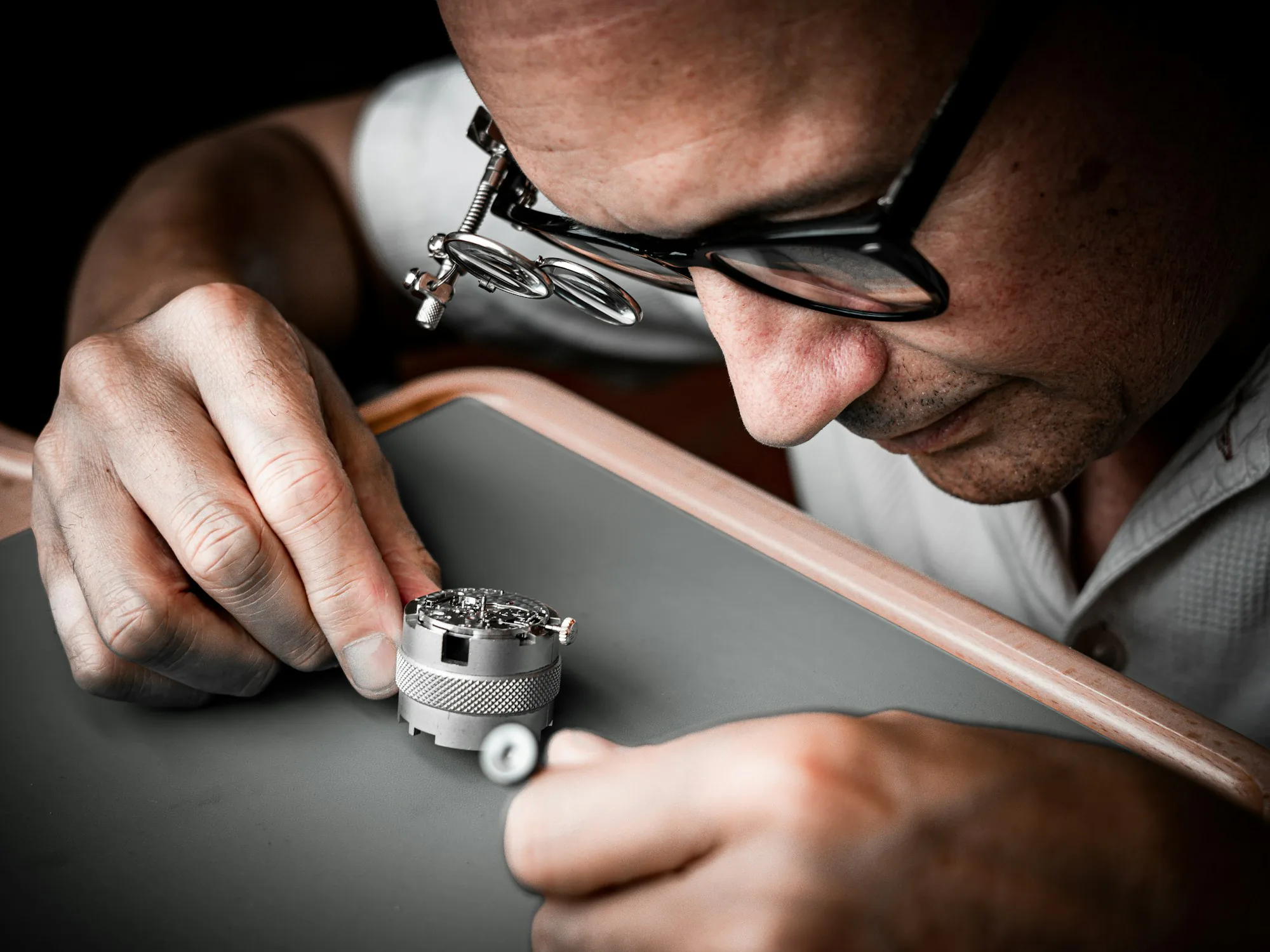
Luxury watch authentication is the single most important step in buying pre-owned. It is also widely misunderstood. There is no universal checklist that works for every brand, and no single detail that proves a watch is genuine. Good authentication is a process of checking many details against what that exact reference should look like, and it usually requires the watch in hand. This guide explains what that process involves and what you should ask before you buy.
At Omar’s Timepieces in Dubai, luxury watch authentication is the first thing we do with any piece we buy or sell, long before a price is discussed.
Authentic and original are not the same thing
A watch can be genuine and still not be original. A real Rolex case can carry an aftermarket dial, a real Audemars Piguet can have replacement bracelet links, and a real Richard Mille can have diamonds added after it left the factory. Proper authentication answers two questions: is the watch made by the brand, and are its parts correct for that reference? Both affect what the watch is worth.
We answer both questions on every watch we handle, and we put what we find in writing rather than leaving it for the buyer to discover later.
Step one: the reference and serial
Every modern luxury watch has a reference number that defines its model, size, metal and configuration, and an individual serial or case number. The first check is that these exist, are correctly formatted for the brand and period, and match each other and the paperwork. A warranty card or certificate whose numbers do not match the watch is an immediate reason to stop.
Step two: case, dial and bracelet
Next, the external components are compared with the correct reference. That means the case shape and finishing, engravings, crown, crystal and any cyclops lens, the dial printing and applied markers, the hands, the bezel, and the bracelet or strap with its clasp. Many problems show up here: printing that is slightly wrong, finishing that does not match, or parts from a different model. The details that matter differ from brand to brand, which is why specialist knowledge matters. Our guide to spotting a fake Rolex shows what this looks like for one brand.
This is the stage where most of our time goes, because it is where a good counterfeit or a swapped part is usually caught.
Step three: the movement
For a conclusive result the movement is inspected, because it is the hardest part to imitate convincingly and the clearest sign of a modified or assembled watch. The calibre should be correct for the reference, finished to the brand’s standard and running properly. Opening a watch requires the right tools and care, which is one reason authentication from photographs alone can only ever be preliminary.
Step four: documents and history
Box, warranty card, certificate, service papers and the original invoice support a watch’s story, but they can be separated from the watch or reproduced. Documents are checked against the watch, never used instead of checking the watch. For older pieces, some brands issue archive extracts that confirm when and how a watch was produced.
We treat papers as supporting evidence rather than proof, which is why we still examine the watch itself in every case.
What a seller should tell you
Who authenticated the watch and what was checked
Whether any parts are not original, and which
Whether the case has been polished, and any known service history
Exactly which documents are included, and that their numbers match the watch
What guarantee is given in writing
A seller who hesitates on any of these is telling you something.
Ask us the same questions. We will tell you what has been replaced, what has been polished, and what we could not verify.
How we authenticate at Omar’s Timepieces
Every watch is checked by our specialists before it is offered: the movement, case, dial, bracelet, serial number and components are verified against the reference, and documentation is reviewed alongside the watch. We do not deal in replicas, modified pieces or watches with removed serial numbers, and we guarantee authenticity on everything we sell. If you ever have a doubt after purchase, we will support you in getting independent verification from an authorised service centre.
We also offer authentication as a service for watches you already own or are considering elsewhere. To browse authenticated watches, visit our shop.
The same process applies whether you are buying from us, selling to us, or asking us to source a specific reference.

Can a watch be authenticated from photos?
Photos allow a preliminary view and can reveal obvious problems, but a conclusive result requires the watch in hand, including an inspection of the movement.
Do box and papers prove a watch is real?
No. Documents support a watch’s history, but they can be separated from the original watch or reproduced. They must match the watch and are checked alongside it, not instead of it.
Is a watch with replacement parts a fake?
Not necessarily. A genuine watch can have non-original parts, such as an aftermarket dial or diamonds. It is still genuine, but it is not original, and that affects its value.






Omar's Curated Collection
At Omar’s Timepieces, every watch is selected with close attention to condition, quality, and presentation.